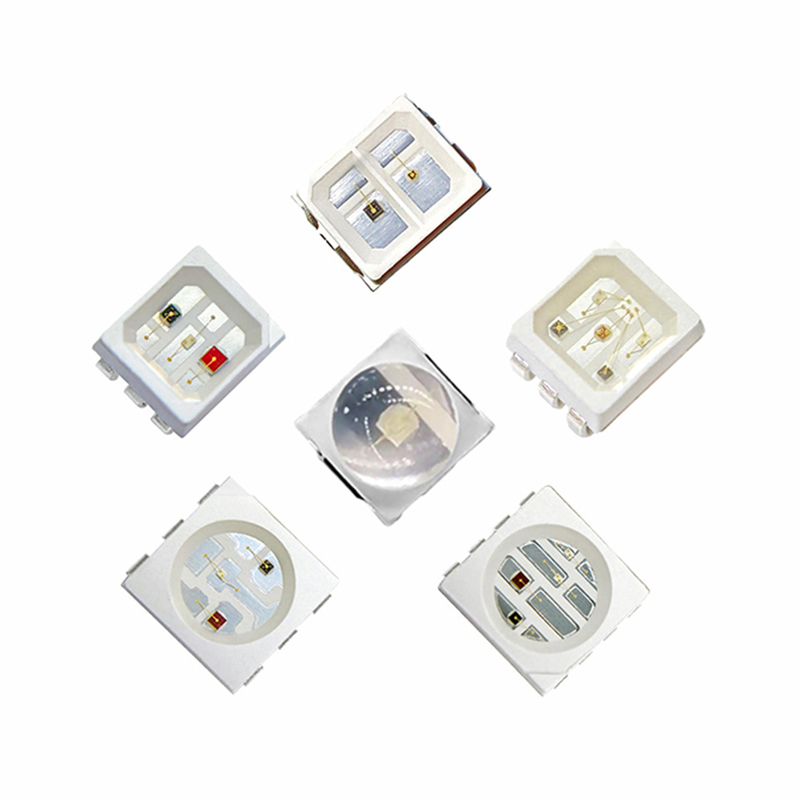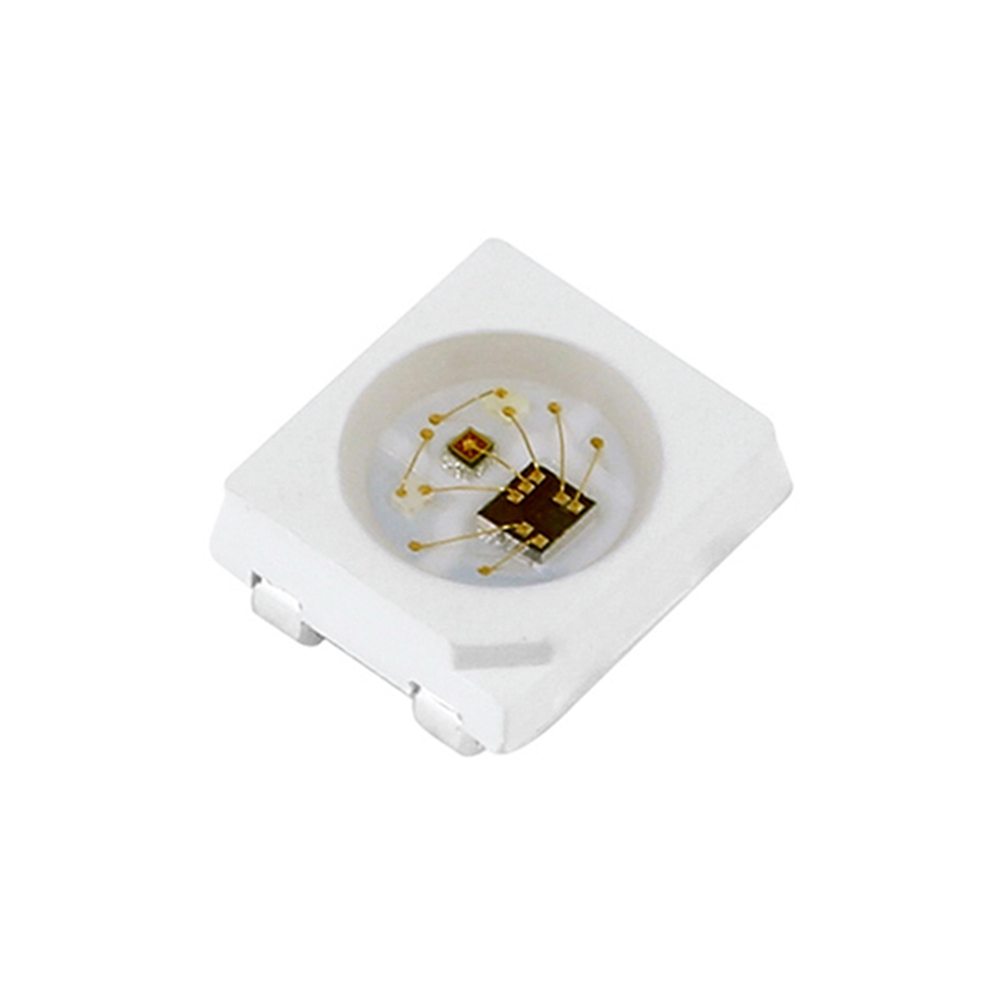
What is the price difference between SMD LED?
What are the differences between different bonding wires, chips, brackets, phosphors, and adhesives?

-
Bonding Wires:
- Pure Gold Wire (99.99% purity):
- Pros: Excellent conductivity, good thermal properties, oxidation resistance, and chemical stability. Ensures stable current transmission, enhancing LED reliability.
- Cons: High cost.
- Gold Wire and High Gold Wire (often referred to as 80% alloy gold wire):
- Pros: Lower cost compared to pure gold wire while maintaining good conductivity and some oxidation resistance.
- Cons: May be inferior to pure gold wire in performance.
- Alloy Wires (varying gold content):
- Pros: Relatively lower cost, adjustable performance by adjusting alloy composition.
- Cons: Some alloys may have slightly lower stability under long-term use, especially in high-temperature environments.
- Copper Wire (including single-crystal copper and palladium-plated copper):
- Pros: Low cost; palladium plating enhances corrosion resistance and extends lifespan.
- Cons: Prone to oxidation, which can reduce conductivity and cause contact issues or heating. Hardness makes bonding challenging and risks damaging chips.
- Iron Wire (very low-end):
- Pros: Extremely low cost.
- Cons: Poor conductivity, low thermal properties, rust susceptibility, and low reliability.
- Pure Gold Wire (99.99% purity):
-
Chips:
- Brand:
- Different brands vary in recognition, technical strength, and quality stability. Well-known brands invest more in R&D, production processes, and quality control, resulting in higher-priced products.
- Grades:
- A-grade: Original chips from manufacturers or primary agents.
- Pros: Stable performance and consistent photometric parameters.
- Cons: Relatively high price.
- B-grade: Chips with defects during production or longer storage time, sold at lower prices.
- Pros: Affordable (about 1/3 to 2/3 the price of A-grade).
- Cons: May have hidden electrical defects; variations in brightness and voltage stability.
- A-grade: Original chips from manufacturers or primary agents.
- Brand:
-
SMD Frames:
- Common materials include:
- Copper Frames (purple copper > red copper > yellow copper):
- Pros: High conductivity, good heat dissipation, and rust resistance.
- Cons: Cost varies based on copper type.
- Aluminum Frames:
- Pros: Inexpensive but lower thermal performance.
- Iron Frames:
- Pros: Very low cost.
- Cons: Poor conductivity, low thermal properties, and susceptibility to oxidation.
- Copper Frames (purple copper > red copper > yellow copper):
- Common materials include:
-
Phosphors:
- White LEDs combine blue chip light with yellow phosphors.
- Aluminate Phosphors:
- Pros: Stable performance, low light decay, high brightness, and broad emission spectrum.
- Cons: Narrow excitation band, lacks red light components, and lower color rendering index (CRI).
- Silicate Phosphors:
- Pros: Broad excitation band, better color rendering, suitable for applications with smaller power requirements.
- Cons: Narrow emission peak, sensitive to humidity, less heat-resistant.
-
Adhesives:
- Adhesive quality significantly affects LED performance.
- Epoxy Resin:
- Pros: Good insulation, mechanical strength, and chemical resistance. Low shrinkage during curing.
- Cons: Aging over time, limited temperature resistance, and stress during curing may affect chips.
- Silicone Gel:
- Pros: High transparency, large refractive index, good thermal stability, low stress, low moisture absorption, high-temperature resistance, and minimal yellowing.
- Cons: Relatively higher cost.
The quality of LED chips depends on multiple factors such as engineering design, material selection, manufacturing process, testing and control. Only by strictly controlling every link can we ensure the production of high-quality products.
850nm vs 940nm Infrared LED