Beauty Devices
Optical Principles and Core Component Selection for LED Beauty Devices
As home-use beauty technology goes mainstream, LED beauty masks and handheld devices have dominated the skincare market. Their core competitiveness lies in two factors: the precision of wavelength combinations and the integration efficiency of the light source hardware.

I. The Science of the Glow: Photobiomodulation (PBM)
LED beauty does not rely on thermal (heat) effects. Instead, it works through Photobiomodulation (PBM)—a process similar to photosynthesis in plants:
- Targeted Penetration: Different wavelengths reach specific layers of the skin.
- Mitochondrial Absorption: Light is absorbed by the mitochondria (the cell's "powerhouse"), boosting the production of ATP (Adenosine Triphosphate).
- Biological Results: This "light signal" triggers cellular repair, stimulates collagen regeneration, and accelerates metabolism.
II. Primary Wavelengths and Their Functions
|
Light Color |
Wavelength |
Penetration Depth |
Core Function |
|
Red |
~630nm–660nm |
Dermis |
Stimulates fibroblasts to produce collagen; reduces fine lines and improves elasticity. |
|
Blue |
~415nm–450nm |
Epidermis |
Powerful antibacterial effect targeting P. acnes; ideal for acne treatment and oil control. |
|
Near-Infrared |
~830nm–850nm |
Deep Subcutaneous Tissue |
Invisible to the eye but deepest penetration. Reduces inflammation and speeds up healing. The "Gold Standard" for anti-aging when paired with Red light. |
|
Yellow/Orange |
~590nm–600nm |
Dermo-epidermal Junction |
Improves oxygen exchange in cells, soothes sensitive skin, and reduces redness/dullness. |
|
Green |
~520nm–550nm |
Surface Dermis |
Fades pigmentation, evens skin tone, and provides a calming effect. |
III. Mainstream Spectral Combination Trends
To maximize clinical efficacy, modern devices are moving from single-wavelength to Multi-Spectrum Fusion:
- Anti-Aging: Red Light + NIR.
- Acne Control: Blue Light + Red Light (to treat and repair simultaneously).
- Total ecovery: Red + Blue + Yellow.
IV. Core Hardware Solution: 5050 SMD LED Integrated Packaging

In multi-wavelength designs, the light source determines the device's performance and physical structure. The 5050 SMD LED has become the industry preferred choice for several reasons:
1. High Integration (3-in-1 or 4-in-1)
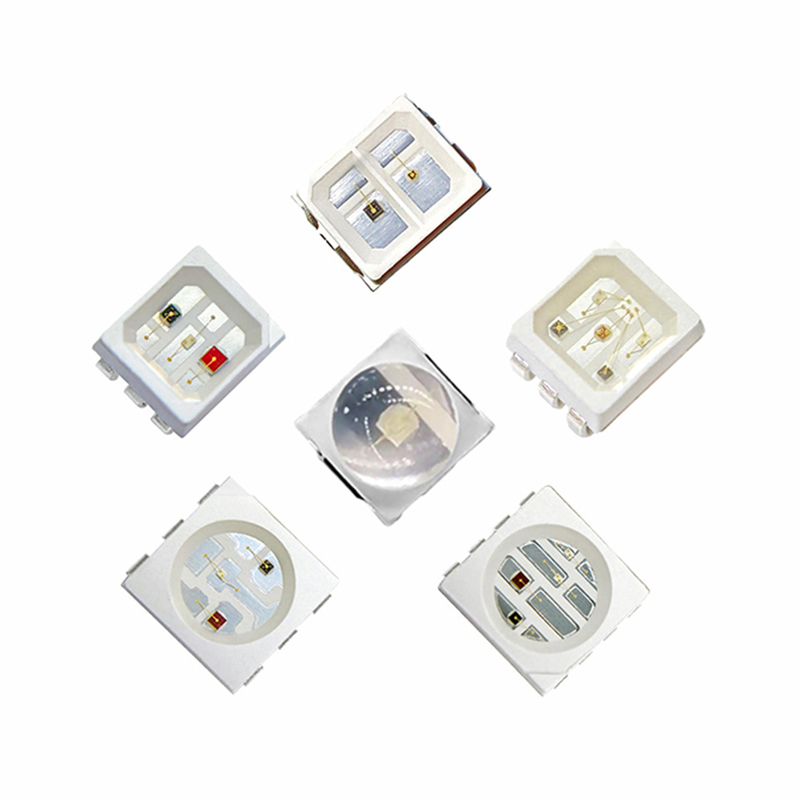
A single 5050 package can house 3 or 4 different wavelength chips (e.g., NIR / Red / Blue / Yellow). This allows one single LED bead to output multiple light spectra, significantly reducing the complexity of the PCB layout.
2. Superior Light Mixing Uniformity
Since multiple chips are integrated within a single encapsulation, the light mixes at the source. This eliminates the "patchy" or "spotty" effect seen in traditional designs using separate LEDs, ensuring the user receives a consistent treatment across the entire skin surface.
3. Sleek and Compact Form Factor
By reducing the number of individual components, manufacturers can design thinner, lighter, and more ergonomic masks. It also reduces solder points, which lowers the failure rate and simplifies the manufacturing process.
4. Optimized Thermal Management
Our 5050 LEDs feature high-thermal conductivity packaging. This ensures low luminous decay and a long lifespan, even during extended treatment sessions, providing a safe and stable output for the end-user.
Conclusion
The competition in LED beauty is essentially a battle of Spectral Design (Efficacy) and Light Source Solutions (Structure & Cost).
If you are looking to build a more competitive, high-performance beauty device, we provide:
- Custom Wavelength Tuning
- Bespoke Multi-Chip Configurations
- Full Application Technical Support
Contact us today to optimize your next-generation beauty tech with our 5050 SMD LED solutions.
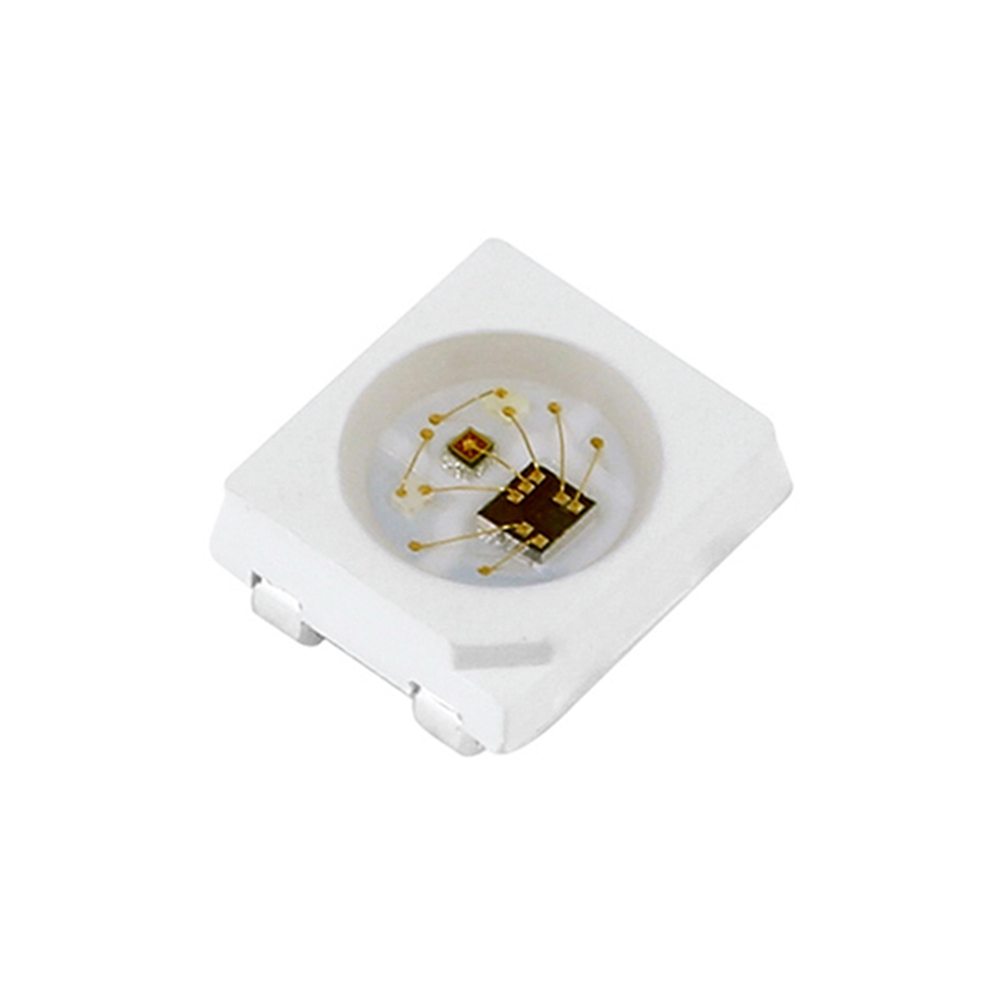
2724 Full color RGB LED Built-in Low-Power IC
Traffic Signal Lights