Smoke Alarm
Analysis of Smoke Alarm Working Principle and LED Emitter Applications
Smoke alarms primarily rely on two mainstream technologies: photoelectric and ionization. The photoelectric type is widely adopted due to its superior safety profile and high sensitivity to smoldering fires. Its core operation depends on optical sensing and dual-wavelength (Infrared + Blue) discrimination technology.
I. Core Operating Principle
Photoelectric Smoke Detector (Mainstream)
Optical Chamber Design: The internal structure features a precision "labyrinth" where the infrared LED light source and the photodiode receiver are positioned at specific angles. In a smoke-free state, light from the emitter cannot directly strike the receiver.
Light Scattering Trigger: When smoke enters the chamber, particles cause Mie scattering (larger particles) or Rayleigh scattering (smaller particles) of the infrared light. A portion of this scattered light is captured by the receiver.
Signal Processing: The microcontroller triggers an alarm when the detected change in light intensity exceeds a pre-set threshold (approx. 0.15 obscuration/ft).
II. Core Requirements for Infrared LED Emitters
|
Parameter
|
Technical Specification
|
Critical Function
|
|
Wavelength
|
850nm or 940nm (940nm mainstream)
|
940nm offers better smoke penetration and is non-visible (no red glow); 850nm is a lower-cost alternative.
|
|
Power
|
Low Power (1-10mW), Pulsed Operation
|
Reduces power consumption, extending battery life up to 10 years. |
| Operating Current |
20-50mA (Typ. 20mA)
|
Constant current drive prevents overcurrent burnout and ensures stable optical output. |
|
Forward Voltage
|
1.4-1.6V
|
Matches driver circuitry for high-efficiency operation.
|
|
Environmental Tolerance
|
-40°C to 85°C, >50,000 hours lifetime
|
Adapts to extreme environments and minimizes maintenance needs.
|
|
Optical Characteristics
|
Narrow Emission Angle, High Smoke Penetration
|
Ensures focused light beam to improve scattering detection efficiency.
|
|
Pulse Frequency
|
Approx. every 10 seconds or on-demand
|
Minimizes power draw and prevents thermal buildup from continuous operation.
|
III. Why Add Blue Light (470nm)?
Smoke alarms employ dual-wavelength technology (Infrared + Blue) primarily to reduce false alarms by distinguishing genuine smoke from interference sources. Its superior ability to differentiate fire smoke from nuisance particles has made it the industry standard.
1. Particle Size Discrimination Principle
Blue Light (470nm) Characteristics: Shorter wavelength, highly sensitive to ultra-fine particles (<1µm) via Rayleigh scattering. It excels at detecting sublimated particles produced during the early stages of a fire.
Infrared (850/940nm) Characteristics: More sensitive to larger particles (>1µm) via Mie scattering, making it ideal for detecting dense smoke from smoldering fires.
Dual-Wavelength Algorithm: By calculating the scattering intensity ratio (ksca) and extinction coefficient ratio (kext) across both wavelengths, the system accurately identifies particle type.
2. Eliminating Common Interference Source
| Interference Source |
Dual-Wavelength Solution (Blue + IR) |
|
Water Vapor |
Water droplets are relatively large; they exhibit weak blue scattering but strong IR scattering—a signature distinct from fire smoke. |
|
Dust |
Irregular particle shapes produce a dual-wavelength scattering ratio that differs significantly from smoke. |
|
Cooking Grease/Oil Mist |
The particle characteristics of cooking aerosols differ from fire smoke, allowing algorithms to filter them out effectively. |
3. Performance Improvements
False Alarm Reduction: Reduced by over 90%, meeting updated standards for sensor contamination resilience.
Comprehensive Fire Coverage: Detects both smoldering fires (large particles) and fast-flaming fires (small particles) simultaneously.
Sensitivity: Achieves detection levels as low as 0.001% obs/m, which is more than 5000x more sensitive than traditional single-IR solutions.
IV. Operational Workflow Summary
Idle State: IR/Blue LEDs pulse at set intervals; the receiver detects no significant light signal.
Smoke Entry: Particles scatter light; the receiver detects a change in intensity.
Dual-Wavelength Analysis: The microcontroller calculates the scattering ratio between the two wavelengths to verify the presence of real fire smoke.
Threshold Alarm: If the calculated value exceeds preset criteria, the audible buzzer and visual indicator are activated.
Core Advantage: Dual-wavelength technology gives smoke alarms a discerning "eye," enabling them to accurately detect real fires while effectively ignoring everyday nuisances, thereby significantly enhancing safety levels in homes and commercial spaces.
V. Recommended LED Emitter Solutions

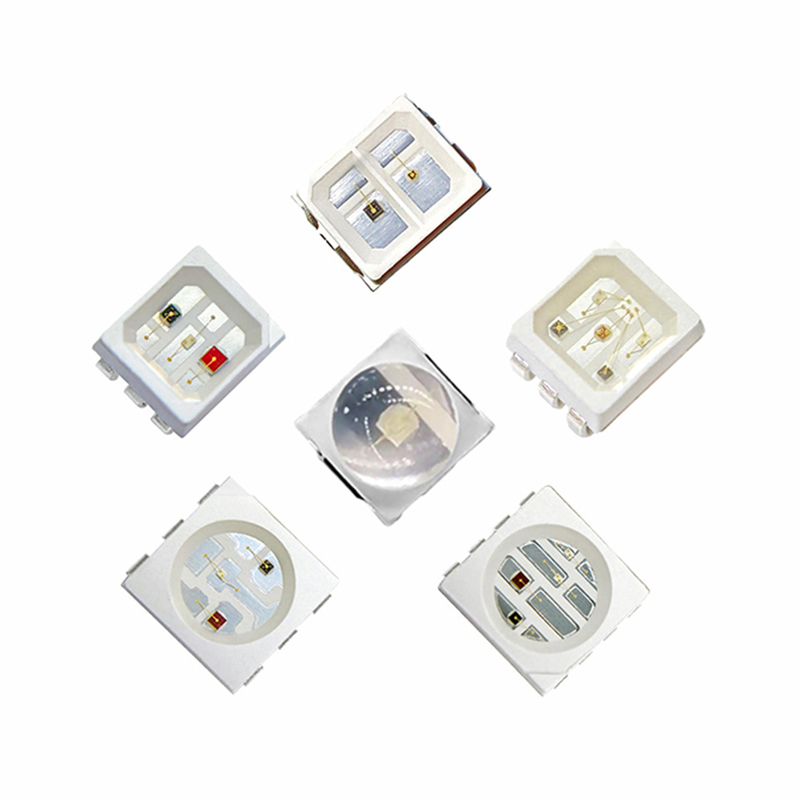
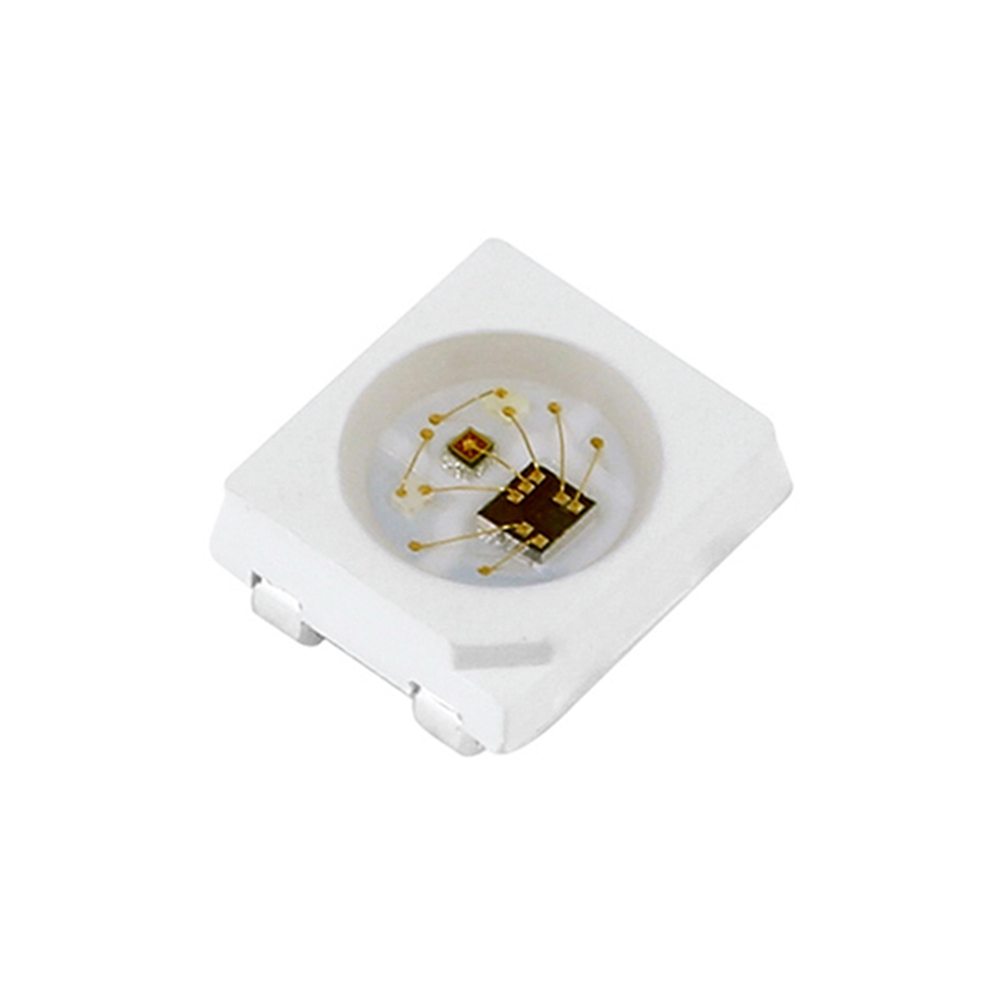
To achieve the superior performance described in dual-wavelength smoke detection, our company offers Infrared LED emitters and complementary 470nm Blue LED emitters. Our product advantages align perfectly with the optical sensing requirements of smoke alarms:
1. Low power consumption、Long life-solid state
Pulsed operation ensures ultra-low power draw, while solid-state reliability guarantees a long operational lifespan, fully meeting the standby demands of smoke alarm applications.
2. Narrow beam angle for emission, wide beam angle for receiving
The small angle emission angle ensures the concentration and directional output of infrared light, high smoke penetration while avoiding direct contact with the receiving tube, reducing false alarms; By combining the characteristics of large angle scattering and reception, the scattered light signals generated by smoke particles can be fully captured, further enhancing the detection sensitivity.
3. The fast response speed (ns level)
Nanosecond-level response captures scattered light signals instantaneously, minimizing the delay in fire alarm activation.
4. The long distance for emission and receiving
Stable optical power output provides sufficient optical path coverage within the labyrinth, accommodating various chamber sizes and designs.
5. With strong anti-interference ability
Effectively resists external interference from ambient light, and when paired with dual-wavelength algorithms, it further reduces false alarm rates for more stable and reliable detection.
Our Infrared LED are used as the core light source for smoke detection, combined with 470nm blue LED, which can fully leverage the advantages of dual wavelength detection, comprehensively improve the accuracy, stability, and anti-interference ability of smoke alarms, and are the ideal optical component choice for smoke alarm equipment.
Traffic Signal Lights
Electronic Shelf Label