Membrane Switches
Membrane Switches (with LED Indication/Backlight): Classification×Technical Principles×Selection Guide
In fields such as smart homes, industrial control, automotive electronics, medical instruments, and aerospace, membrane switches have gradually replaced traditional mechanical buttons to become a core human-machine interface component, thanks to their advantages in thinness, flexibility, high customizability, excellent protection, and strong integration.
A membrane switch is a functional component of electronic equipment made from flexible insulating materials and conductive materials. It integrates switching functions, indicating elements, and instrument panels, combining multiple capabilities such as button triggering, status indication, backlight illumination, and circuit conduction. Different types of products vary significantly in technical principles, performance, cost control, and application scenarios.
This article focuses on membrane switch solutions that integrate LED light sources, systematically outlining the mainstream categories, technical characteristics, and selection logic to serve as a reference for industry applications.
1. Mainstream Classification and Technical Analysis of Membrane Switches (with LED Indication/Backlight)
From a functional and implementation perspective, membrane switches that integrate LED light sources can be divided into three main categories: indicator light type, backlight illumination type, and touch + backlight integrated type. Among these, the backlight illumination type is currently the mainstream solution in the mid-to-high-end market and has evolved into several technical approaches.

1.1 Indicator Light Type (LED Indicator Type)
The LED indicator type is the most widely used entry-level solution, focusing on basic button status indication.
Technical Principle: LED chips are mounted at positions corresponding to each button. When powered, the LEDs emit light from a single point to indicate status. Pressing the button brings the conductive contacts of the upper and lower circuit layers together, triggering circuit conduction.
1.2 Backlight Illumination Type
The backlight illumination type is the mainstream solution for mid-to-high-end applications. It uses optical design to achieve uniform surface backlighting, enhancing the operating experience in low-light environments and improving product quality. Depending on the backlight implementation method, it can be divided into the following five technical approaches:
1.2.1 Direct-Lit Backlight Type
Technical Principle: An array of LED chips is placed directly beneath the membrane switch panel, behind the circuit layer. Light emits directly upwards to achieve full-area surface backlighting, supporting zoned dynamic light control.
1.2.2 LGF (Light Guide Film) Backlight Type
Technical Principle: Light from side-mounted LEDs enters a Light Guide Film (LGF). Using micro-optical structures, the film converts point light sources into a uniform surface light source through total internal reflection and refraction.
1.2.3 Light Guide Plate Backlight Type
Technical Principle: Light from side-mounted LEDs enters a light guide plate (typically made of PMMA or PC). Dot patterns on the plate scatter the light, converting the point source into a uniform surface source.
1.2.4 Light Guide Sheet Backlight Type
Technical Principle: Light from side-mounted LEDs enters an ultra-thin light guide sheet (made of PET/PC). A printed dot pattern on the sheet creates the surface backlight. Compared to the precision molding process of LGF, light guide sheets often use screen printing, offering more controllable costs.
1.2.5 Fiber Optic Light Guide Type
Technical Principle: An LED light source is coupled into the input end of PMMA polymer optical fibers. Light is transmitted through the fibers via total internal reflection and emitted in designated areas to achieve precise backlighting.
1.3 Touch + Backlight Integrated Membrane Switch (Capacitive with LED Backlight)
This solution targets intelligent, high-end applications. It overcomes the physical limitation of mechanical pressing and represents a significant development direction for smart interactive interfaces.
Technical Principle: Based on capacitive sensing, a touch from the human body changes the capacitance value of an electrode, triggering a switch signal. This is integrated with an LED backlight system to achieve intelligent interaction between touch operation and backlight effects.
2. Key Considerations for Selecting Membrane Switches (with LED Indication/Backlight)
Based on the technical characteristics of different types, the most suitable solution can be quickly identified according to core requirements:
- Basic button status indication only: Prioritize the LED Indicator Type. It offers low cost, easy implementation, and convenient maintenance.
- Thin and portable design, high backlight uniformity: Prioritize the LGF Backlight Type. It is perfectly suited for ultra-thin designs.
- Large industrial applications, high brightness requirements, thickness not critical: Prioritize the Direct-Lit or Light Guide Plate Backlight Type.
- General consumer applications, balancing cost and backlight effect: Prioritize the Light Guide Sheet Backlight Type.
- Specialized or extreme environments: Prioritize the Fiber Optic Light Guide Type.
- High-end intelligent interaction requirements: Prioritize the Capacitive Touch + Backlight Integrated Type.
3. Ideal Supporting Components for Membrane Switches: A Flexible LED Light Source Solution
Whether for a basic indicator-type membrane switch or a high-end backlight or touch-integrated type, LED chips are the core component that determines indication effect, backlight uniformity, overall device thickness, and long-term reliability. Addressing the membrane switch industry's demands for ultra-thin designs, high uniformity, low power consumption, and ease of integration, we offer a comprehensive and flexible light source selection solution. This allows for precise matching of the most suitable LED products based on different structural designs and optical requirements.
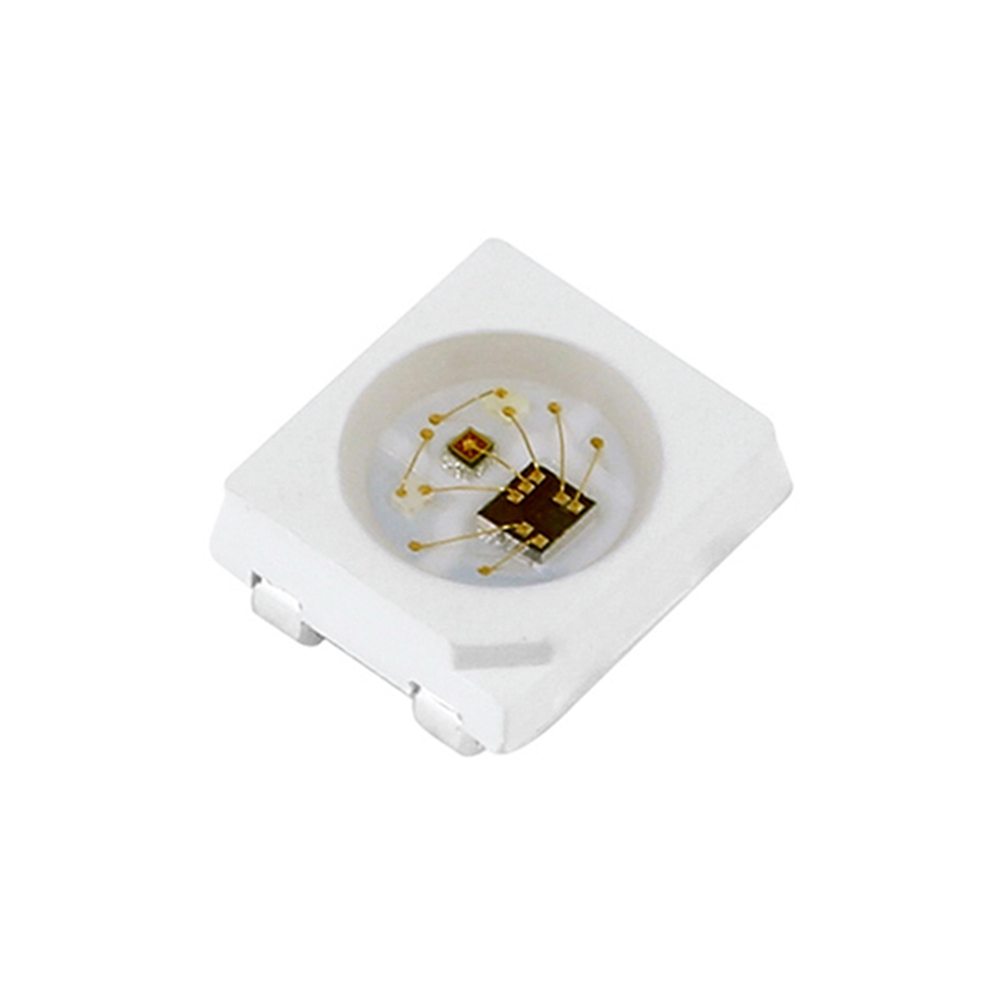
Take our 0.35mm ultra-thin 1206 LED chip as an example. It represents our technological advantage in the field of ultra-thin top-emitting LEDs. However, it's important to note that this specific chip is a top-emitting type and is not suitable for all membrane switch structures. For instance, edge-lit solutions using light guide films or plates often require side-emitting LEDs to achieve higher light efficiency and uniformity.

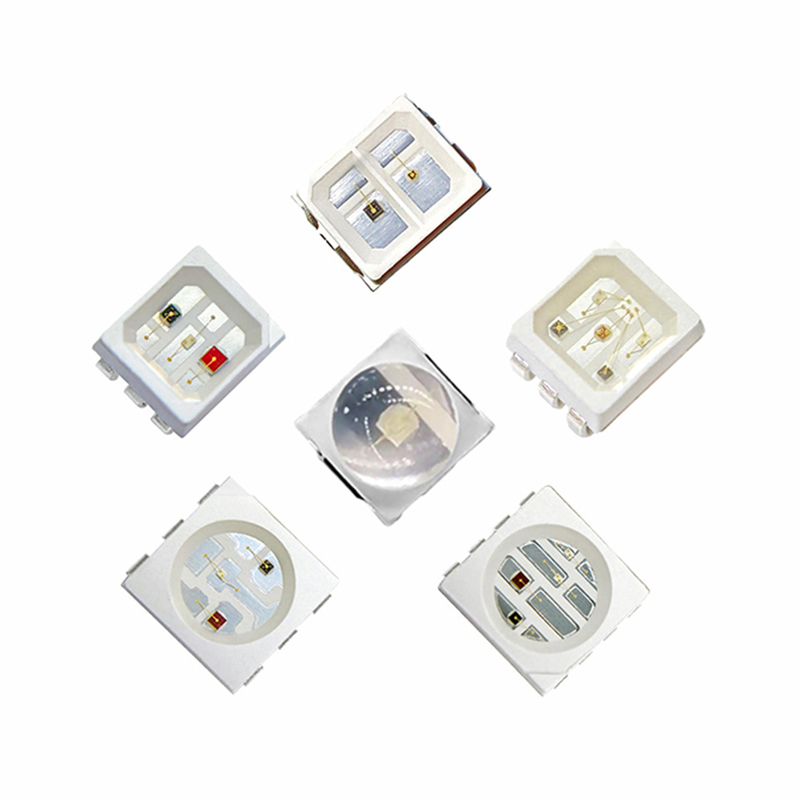
To this end, we have built an LED product matrix covering top-emitting, side-emitting, multi-color integration, and ultra-thin packaging types, which can flexibly adapt to different applications:
- Indicator Type Membrane Switches: We offer high-brightness, low-power top-emitting LEDs, available in single-color, bi-color, and multi-color configurations to meet basic status indication needs.
- LGF / Light Guide Plate Backlight Types: We recommend side-emitting LEDs, which are highly compatible with light guide structures for achieving ultra-thin, uniform backlighting.
- Direct-Lit Backlight Type: We offer top-emitting LEDs with a wide angle, optimizing light mixing and reducing bright spots and shadows.
- Touch + Backlight Integrated Type: We support customized light sources such as RGB full-color and low-height packages, enabling dynamic lighting effects to complement intelligent interaction requirements.
Our LED products offer the following technical advantages:

1. Extremely Ultra-Thin, Enabling Slimmer Device Designs
- Taking the 1206 package as an example, the thickness can be as low as 0.35mm, significantly thinner than the industry standard (typically 0.7mm–1.1mm). This effectively solves the thickness buildup issue associated with arranging multiple LEDs, providing more design freedom for ultra-thin membrane switches.
- Single-color size: 3.2×1.6×0.35 mm
- Bi-color / RGB size: 3.2×2.7×0.35 mm
2. Full Color Range Coverage, from Simple Indication to Full-Color Interaction
- We offer a wide range of single-color options (red, green, blue, yellow, yellow-green, orange, white, etc.), as well as bi-color and RGB full-color specifications. This covers all needs from basic status indication to zoned dynamic light control and full-color ambient backlighting.
3. Optimized Optical Design for Enhanced Backlight Uniformity
- A maximum luminous angle of up to 140°. This wide-angle output effectively shortens the light mixing distance, making it suitable for ultra-thin backlight structures.
- It significantly improves issues like bright spots and shadows in direct-lit configurations, while also enhancing light efficiency utilization in light guide films/plates, resulting in a smoother, more uniform surface backlight.
4. High Reliability for Scalable Production and Harsh Environments
- Compatible with standard SMT processes like lead-free reflow soldering, meeting high-volume production requirements.
- Manufactured with high-quality chips, high-temperature resistant and anti-yellowing materials, and gold wire bonding processes, ensuring long-term illumination stability.
- Low thermal resistance design effectively mitigates localized temperature rise, extending the overall lifespan of the device.
5. Low Power Consumption and Environmentally Friendly, Meeting Green Manufacturing Standards
- Rated operating current of 20mA, supports low-current dimming. Low forward voltage (e.g., typical red is 1.8V–2.4V, varies by color) helps reduce overall system power consumption.
- Typical lifespan of tens of thousands of hours.
- Compliant with RoHS standards, manufactured using lead-free, environmentally friendly materials.
Whether your primary need is cost reduction and efficiency improvement, or if you are targeting complex scenarios like high-end ultra-thin backlighting and touch integration, we can provide a stable, reliable, and highly compatible LED light source solution. This empowers you with greater design freedom and superior performance for your membrane switches.
Electronic Shelf Label
The Impact of SMD LED on Display Screens